We advance data-driven molecular design as a platform for solving unmet global challenges — coupling automation, structural insight, and molecular-level understanding to accelerate solutions in human health, sustainable catalysis, and infectious disease. Our group cultivates an environment where rigorous science and bold ideas converge.
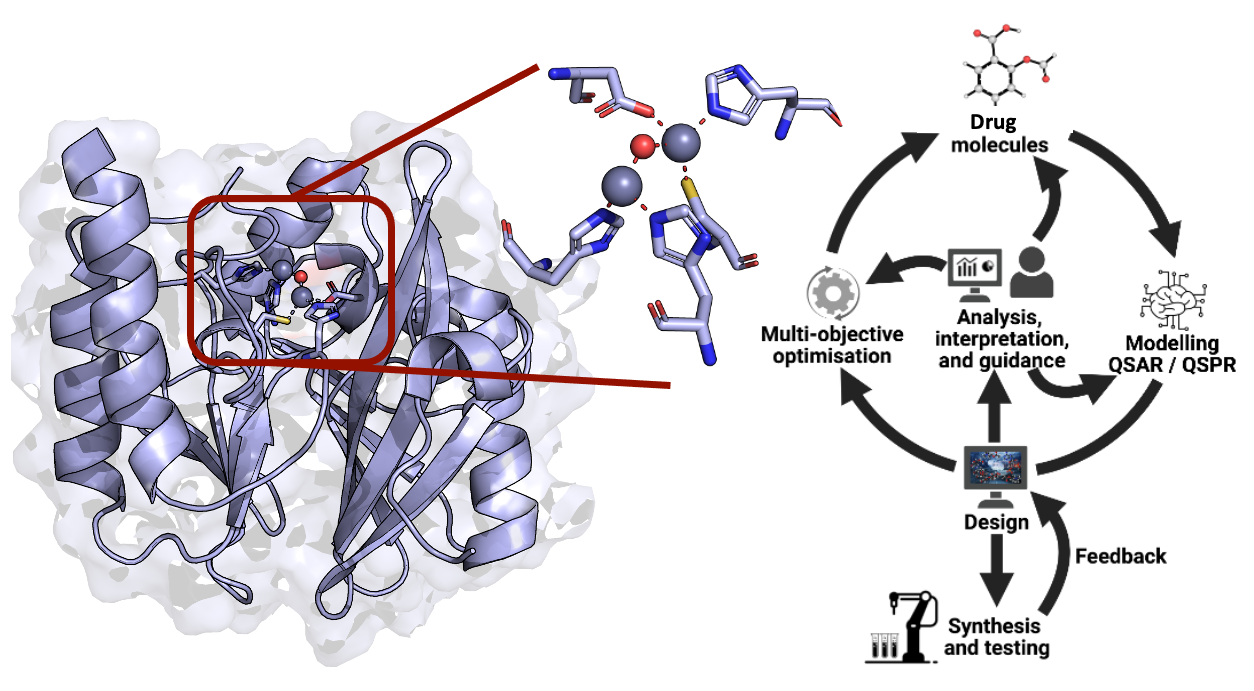
In the field of computer-aided drug design, the pivotal question often revolves around determining the next optimal molecule to achieve specific property criteria. Two primary approaches guide this quest:
While exhaustive virtual screening, utilizing computational tools like docking for structure-based drug design, can aid in hit identification, it becomes challenging when dealing with the vast libraries encompassing billions of molecules in today's virtual landscape. Our group focuses on diverse methods for selecting and suggesting molecular structures through iterative optimization rounds. This encompasses navigating discrete design spaces of candidate molecular structures using model-guided optimisation techniques like Bayesian optimisation. A particularly intriguing thread of our research involves crafting generative models that consider synthesisability constraints, proposing molecular structures feasible for synthesis. Efficiency in sampling is also a primary concern. In the realm of in-silico benchmarks, where hundreds of thousands of molecules might be "tested," aligning with practical experimental possibilities becomes crucial, calling for models that efficiently explore these vast molecular spaces.
Related Publications →Nature's array of metalloenzymes using molecular oxygen via iron (Fe) centers presents a fascinating landscape. Among these, a significant cohort utilizes a heme central ligand, while numerous others rely on non-heme ligands, showing the variety in enzymatic systems. These enzymes frequently use an oxo-iron(IV) species for oxidation reactions, extensively studied in the nonheme enzyme taurine/alpha-ketoglutarate dioxygenase. However, this species remains elusive within cytochromes P450 due to its short lifespan, making experimental studies in this field challenging. This complexity leads to a strong dependence on theoretical modeling, a key part of our research. It offers invaluable insights into pivotal queries:
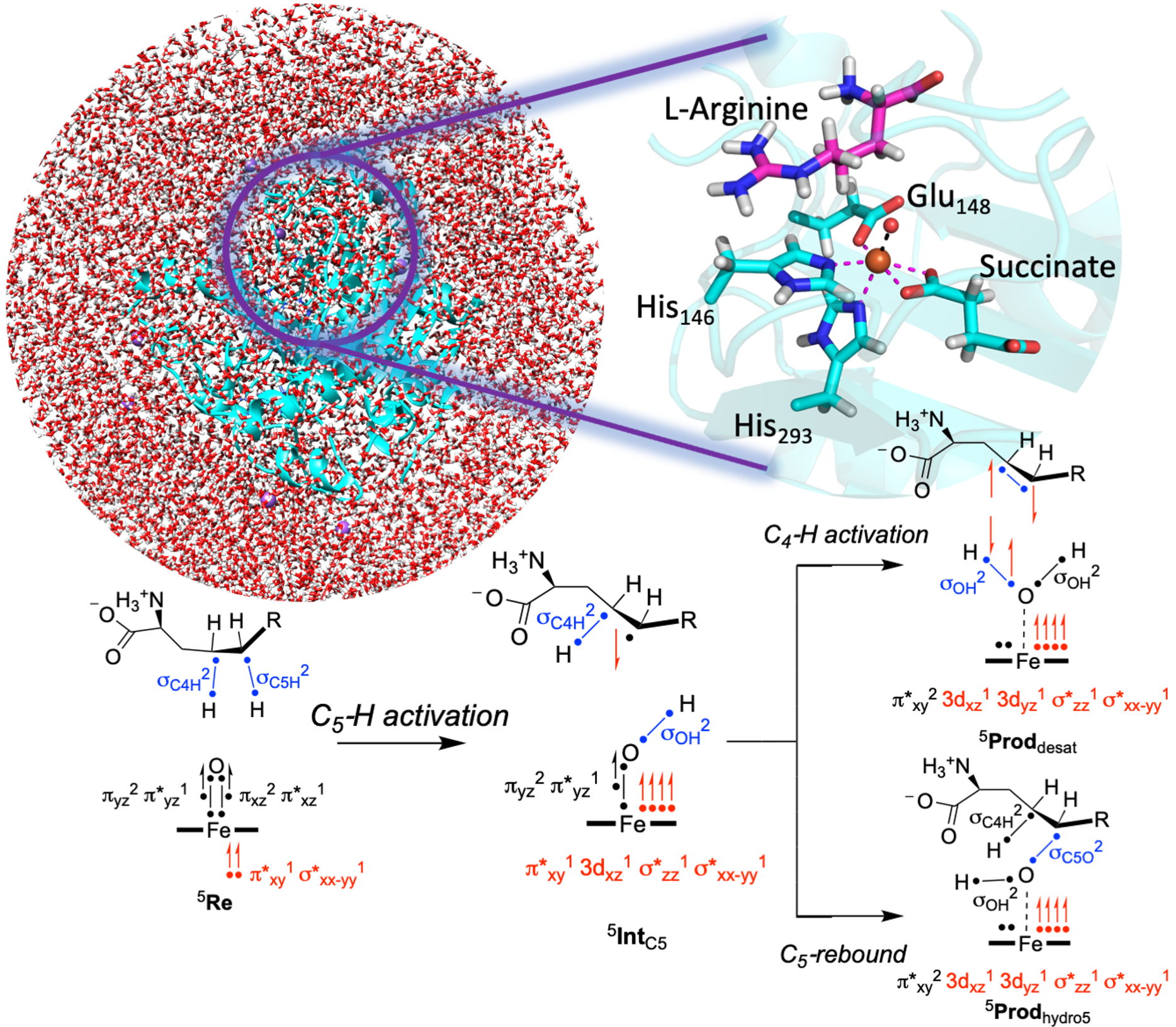
Through the lens of multiscale modeling, our effort delves deep into unraveling these fundamental mysteries, peering into the heart of enzymatic catalysis. Our research has been marked by numerous detailed studies employing density functional theory (DFT) and hybrid quantum mechanics/molecular mechanics (QM/MM) methodologies, exploring the intricate nature of substrate oxidation catalysed by both heme and nonheme enzymes. Beyond understanding nature's catalysts, we leverage these mechanistic insights to engineer novel biocatalysts with tailored reactivity — paving the way for sustainable, selective chemical transformations that address the demands of green chemistry and industrial synthesis.
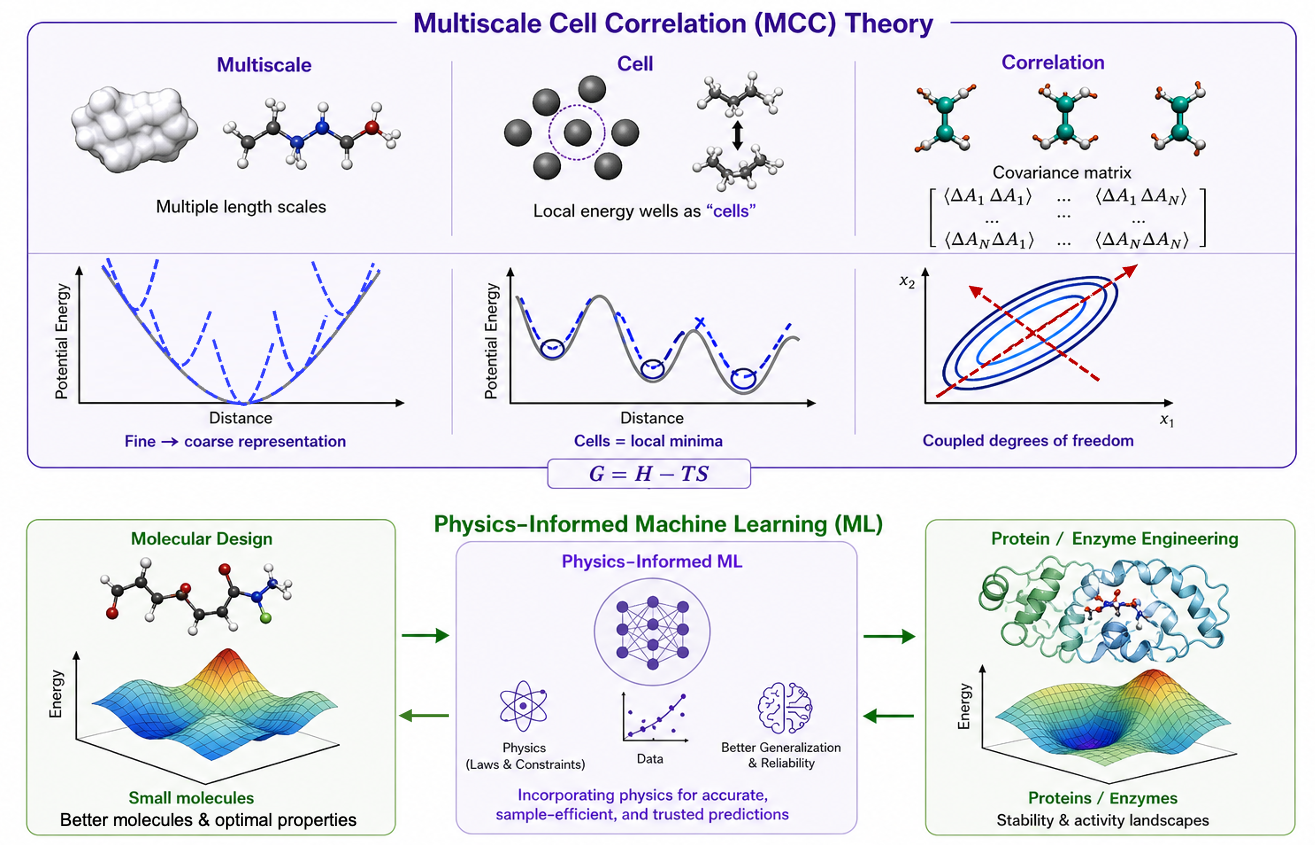
Related Publications →We develop novel computational methods that span statistical mechanics and physics-informed machine learning, with applications ranging from small molecule thermodynamics to complex biomolecular systems, generative molecular design, and protein engineering.
Our work falls into two interconnected strands. First, we develop statistical mechanics-based methods — including Multiscale Cell Correlation (MCC) theory — to rigorously compute entropy and thermodynamic stability across systems ranging from small drug-like molecules to large biomolecular assemblies. Second, we build physics-informed machine learning models that embed physical laws directly into the learning framework, enabling more accurate and generalisable models for de novo molecular generation and the rational design of proteins with improved stability, activity, and selectivity.
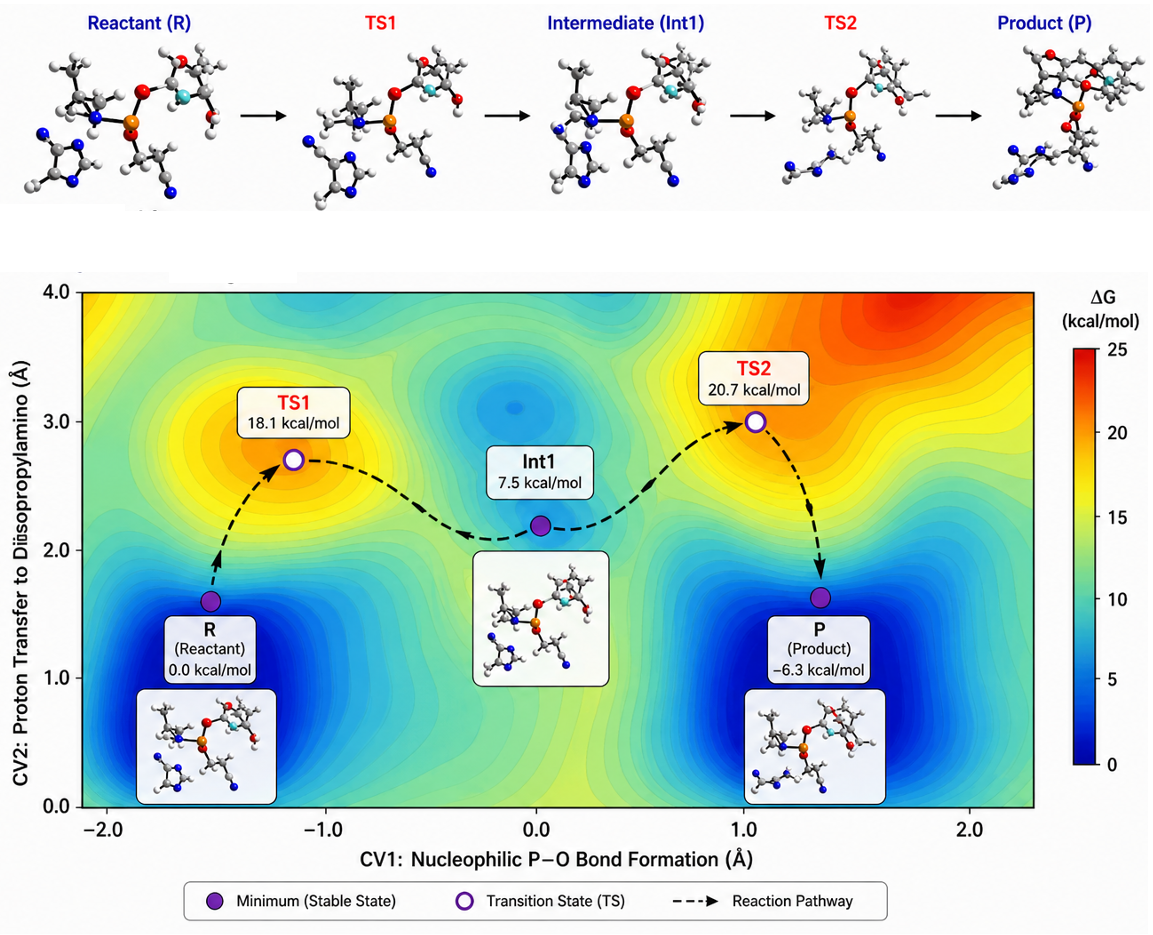
Related Publications →In the realm of physical organic chemistry, our approach involves employing Density Functional Theory (DFT) and ab initio quantum chemical calculations. These tools serve as windows into the reactivity of unconventional organic structures, unraveling the underlying reasons behind regio- and stereoselectivity in chemical reactions. This knowledge forms the basis for developing novel reactivity models, steering synthetic endeavors. These applications span diverse areas, including exploring enantioselective catalysis, and gaining a deeper comprehension of catalytic pathways. By leveraging these computational methods within the context of physical organic chemistry, we decode the intricate mechanisms guiding chemical reactions, paving the way for advancements in synthetic strategies and the understanding of complex catalytic processes.
Related Publications →